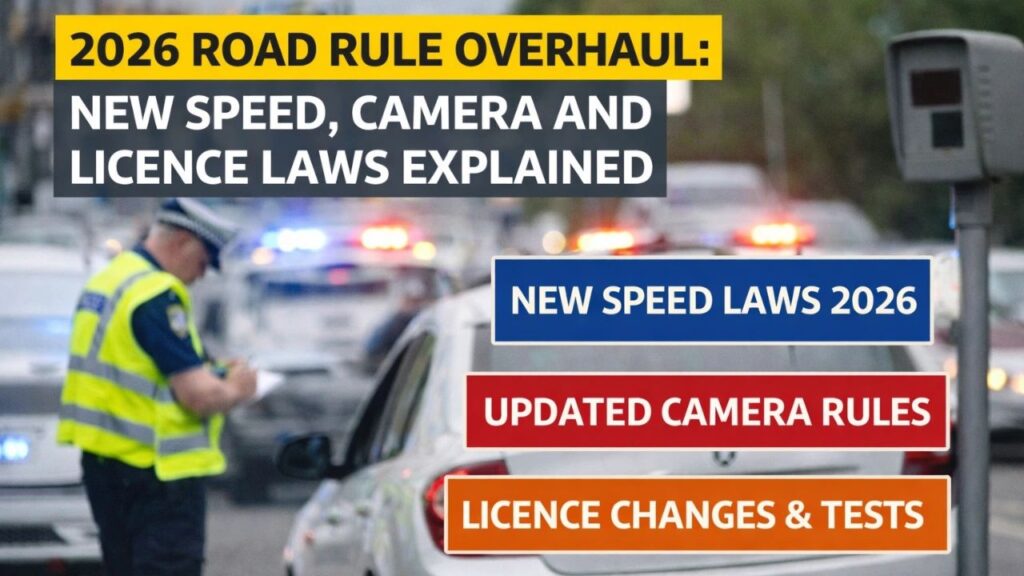
Australia’s roads are entering a new era of enforcement in 2026, with one of the most comprehensive road rule overhauls in recent years. The updated framework focuses on speed compliance, advanced camera technology, and stricter licence standards—changes designed to improve safety outcomes while modernising how traffic laws are enforced.
For everyday motorists, these reforms represent more than policy adjustments. They signal a shift toward smarter surveillance, faster penalty processing, and tighter accountability behind the wheel. Whether commuting daily, driving long-distance, or supervising learner drivers, understanding the updated rules has become essential for staying compliant and avoiding costly mistakes.
Why 2026 Marks a Turning Point for Road Enforcement

Road safety authorities across Australia have spent years analysing accident patterns, driver behaviour, and emerging technology. The 2026 overhaul reflects a coordinated strategy to address persistent risks, particularly speeding and distracted driving.
In recent years, data has shown that driver distraction—especially mobile phone use—remains one of the fastest-growing contributors to serious accidents. At the same time, speeding continues to play a major role in high-impact collisions.
Technology now allows authorities to enforce regulations more consistently than ever before. Rather than relying solely on roadside patrols, automated systems can identify violations in real time, reducing human error and increasing detection accuracy.

This transition toward technology-driven enforcement forms the backbone of the 2026 reforms.
Key Focus Areas of the 2026 Road Rule Changes
The overhaul concentrates on three central pillars that affect nearly every driver.
1. Stronger Speed Enforcement Measures
Speed management remains a top priority in the updated framework. Authorities have introduced stricter penalties and expanded monitoring zones to discourage risky behaviour.

Key developments include:
- Higher penalties for extreme speeding offences
- Reduced tolerance thresholds in selected regions
- Expanded use of average speed cameras for passenger vehicles
- Increased deployment of mobile speed detection units
- Extended double demerit enforcement periods during peak travel times
Average speed cameras, once mainly used to monitor heavy vehicles, are now being introduced for general motorists in certain highway corridors. These systems calculate the average speed across long distances, discouraging drivers from slowing briefly near fixed cameras before accelerating again.
For drivers accustomed to traditional speed enforcement, this represents a significant behavioural shift.
2. Expanded Camera Technology and AI Monitoring
One of the most visible elements of the 2026 reforms is the expansion of intelligent camera systems.
Modern cameras are now capable of detecting multiple offences simultaneously, transforming how violations are identified and processed.
Key upgrades include:
- Large-scale rollout of mobile phone detection cameras
- AI-powered seatbelt compliance monitoring
- Multi-function cameras detecting speed and phone use at once
- Increased use of mobile and unmarked enforcement vehicles
- Wider geographic coverage across urban and regional areas
Mobile phone detection cameras are particularly advanced. They can identify drivers touching or holding devices—even at low speeds or while waiting at intersections.
Penalties for mobile phone offences have increased in several jurisdictions, reflecting the elevated safety risk associated with distracted driving.
For drivers who rely heavily on smartphone navigation, this means ensuring devices are securely mounted and operated hands-free at all times.
3. Updated Licence Compliance Requirements
Licence management is also evolving in 2026, with several reforms affecting both new and experienced drivers.
These updates include:
- Wider adoption of digital driver licences
- Stricter reporting requirements for certain medical conditions
- Revised testing standards for overseas licence conversions
- Lower tolerance for repeat high-risk offenders
- Updated rules affecting learner and provisional drivers
Digital licences are becoming increasingly accepted nationwide through official transport applications. While physical cards remain valid, digital versions provide added convenience and faster identity verification.
For many motorists, the shift toward digital documentation represents a move toward streamlined licensing systems that align with modern lifestyles.
Financial Implications for Motorists
Beyond behavioural changes, the 2026 road rule overhaul also carries financial consequences.
Fines for several offences have increased, particularly those associated with distracted driving and excessive speed. Insurance providers are also expected to respond to stricter enforcement by adjusting premium calculations based on violation history.
Potential financial impacts include:
- Higher fines for repeated offences
- Faster accumulation of demerit points
- Earlier licence suspension thresholds
- Increased insurance premiums following violations
- Additional administrative costs for licence reinstatement
For drivers managing tight budgets or maintaining multiple vehicles, even minor infractions could lead to significant long-term expenses.
Staying compliant is not only safer—it is financially smarter.
How Everyday Drivers Are Being Affected
The 2026 reforms apply broadly across the driving population, from urban commuters to rural motorists.
Several groups may notice the greatest impact:
Daily Commuters
Frequent driving increases exposure to automated monitoring systems.
Regional Drivers
Extended highway travel increases interaction with average speed camera zones.
Provisional Drivers
Lower demerit thresholds mean stricter consequences for early-career mistakes.
Heavy Vehicle Operators
Already subject to strict monitoring, these drivers now face expanded compliance expectations.
Technology-Dependent Drivers
Reliance on smartphones for navigation requires careful adherence to hands-free regulations.
Even small behavioural habits—such as briefly checking notifications—can now result in penalties under enhanced camera detection systems.
The Technology Behind Modern Enforcement
Behind the scenes, the 2026 overhaul relies heavily on advanced digital infrastructure.
Artificial intelligence plays a key role in identifying violations, analysing images, and verifying compliance. Automated systems can detect patterns that would be difficult for human observers to identify consistently.
These technological upgrades deliver several advantages:
- Faster detection of offences
- Reduced reliance on manual enforcement
- Improved accuracy in identifying violations
- Expanded coverage across large geographic areas
- Greater consistency in applying penalties
For drivers, this means enforcement is becoming less visible but more effective.
The days of relying on visual awareness of fixed cameras alone are quickly fading.
Practical Steps Drivers Should Take Now
Adapting to the 2026 road rule environment does not require dramatic lifestyle changes, but it does demand increased awareness.
Simple preventive actions can make a significant difference.
Recommended steps include:
Use Hands-Free Technology Properly
Ensure smartphones are mounted securely before starting a journey.
Monitor Speed Consistently
Maintain steady speeds, especially on highways equipped with average speed monitoring.
Check Demerit Point Status Regularly
Understanding current point balances helps avoid unexpected suspensions.
Stay Updated on Local Rule Adjustments
While national strategies guide reforms, state-specific rules still apply.
Adopt Defensive Driving Habits
Smooth driving reduces both safety risks and enforcement exposure.
Small improvements in driving discipline can significantly reduce the likelihood of receiving penalties.
Long-Term Goals Behind the Overhaul
While the reforms introduce stricter enforcement, their broader goal is prevention rather than punishment.
Authorities aim to create safer driving environments by reducing opportunities for risky behaviour. By combining technology with consistent regulation, the system encourages drivers to adopt safer habits naturally.
Long-term objectives include:
- Reducing road fatalities nationwide
- Lowering the number of serious injuries
- Improving driver awareness and compliance
- Standardising enforcement practices across jurisdictions
- Encouraging responsible use of modern technology while driving
These outcomes reflect a shift toward proactive safety strategies rather than reactive enforcement.
A New Era of Driving Responsibility
The 2026 road rule overhaul represents more than regulatory change—it marks a cultural shift in how drivers interact with the road environment.
Advanced camera systems, stricter speed enforcement, and modernised licence standards are redefining expectations for safe driving behaviour. As technology becomes more integrated into enforcement, compliance will rely less on observation and more on consistent discipline.
For motorists across Australia, adapting early offers clear advantages. Awareness, preparation, and responsible habits remain the most effective tools for navigating this new landscape.
In a driving environment shaped by intelligent monitoring and tighter standards, the safest strategy remains simple: drive responsibly, stay informed, and respect the rules that keep everyone moving safely.